B2B eCommerce Solution
Complete B2B eCommerce solution built for your business
One integrated solution for B2B eCommerce, PIM, DAM, ERP integration, and managed infrastructure. Acquire B2B customers digitally, serve them effortlessly, and scale without the chaos.

Adobe Solutions Partner
12+ Years
B2B-Only Focus
100K+
SKUs Managed per Client

70+ Brands. Zero mediocrity.




What You’re Up Against
Enterprise B2B eCommerce
challenges our solution solves
User-friendly
B2B eCommerce
portal
Product
information
chaos
ERP integration
breaks at
scale
Serving existing
customers
efficiently
Fragmented
digital
assets
IT maintenance
and operational
risk

One platform. Six business outcomes.
What changes when everything actually works together
 Expanding digital sales channels
 Expanding digital sales channels
 Acquire customers beyond your sales team’s geographic reach. Enable distributors and partners to onboard digitally, reducing dependency on physical sales presence.
Serving existing customers efficiently
 Serving existing customers efficiently
 Reclaim 18+ hours per week from service inquiries. Sales reps focus on high-value accounts while customer satisfaction improves with self-service access.
Product information chaos
 Product information chaos
 Product updates move from weeks to hours. Launch new products across all channels simultaneously as one version of truth eliminates mismatched data.
Fragmented digital assets
 Fragmented digital assets
 Sales, marketing, and support always use correct files. Eliminate errors from outdated datasheets or images while version control prevents wrong assets in circulation.
ERP integration break at scale
 ERP integration break at scale
 Eliminate 15+ hours per week of manual order re-entry. Real-time inventory accuracy across all channels ensures predictable operations that scale with transaction volume.
IT maintenance and operational risk
 IT maintenance and operational risk
 Zero internal IT ownership for platform maintenance. Proactive monitoring catches issues before they impact operations so security, compliance, and backups are handled automatically.

Enterprise-grade technology stack
Built on platforms you trust. Integrated to work as one.
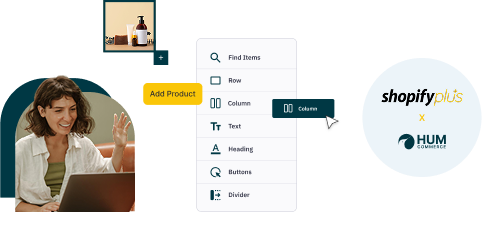
B2B eCommerce Platforms - Adobe Commerce | Shopify Plus
Scalable, secure platforms built for high-volume B2B operations with complex pricing, customer segmentation, and multi-channel selling.
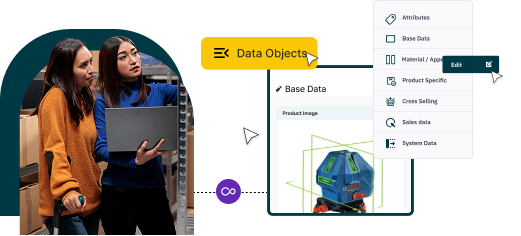
B2B Product Information Management & Digital Asset Management - PimCore
Centralized system managing 100K+ SKUs with structured product data, digital assets, version control, and multi-channel publishing.
ERP Integration - Epicor
Bidirectional integration with modern API-based systems and legacy file-based or CSV platforms. Real-time sync of orders, inventory, invoices, shipments, and returns.
Managed Infrastructure - AWS | Hyva Performance Optimization
Enterprise-grade hosting with 24/7 monitoring, automated backups, security compliance (PCI-DSS, GDPR, SOC 2), and proactive threat detection.
Why this model works
Why B2B manufacturers choose us over other agencies

Reason #1
Your success matters to us

Reason #1
- 12+ years building B2B stores for manufacturers and distributors.
- We recommend what’s right, not what’s easy.

Reason #2
Total clarity with one partner
Reason #2
- One vendor controlling the entire stack.
- No coordination chaos when something breaks.
Reason #3
Flexible terms that protect you
Reason #3
- Your data stays exportable with no lock-in.
- Proactive monitoring catches issues early.
Case Studies
Get a close look at
how we’ve made a difference


B2B | Industrial Manufacturing | Welding Safety | Salesforce & CPQ
Optimized quoting and sales workflows through Salesforce, CPQ, and Duchess Integration, enabling faster, error-free quoting.
+88%
faster
quoting
100%
real-time
data sync


Manufacturing | Magento 2.4.4 Compatibility
Automated quoting and eliminated pricing errors through Epicor CPQ & Magento Integration, enabling seamless B2B eCommerce scaling.
+75%
faster
workflows
100%
real-time quoting
accuracy


Industrial Manufacturing | Akeneo PIM
Enhanced product management and B2B ordering with Akeneo PIM, million+ SKU imports, and a custom PO system for faster procurement.
+1 Million
SKUs managed effectively

See it working for your business
Book a 90-Day roadmap session
160-minute technical review
- We analyze your ERP, catalog, pricing logic
- You see if this fits your architecture
- No generic demo. Your actual data.
2 Custom implementation plan
- Fixed commercial terms
- Your 90-day go-live roadmap
- Optional: Pre-commit technical validation
3Decision point
- Move forward with confidence
- Or walk away with a free roadmap
- Your data stays yours either way
Schedule Your Technical Review
Tell us about your current setup for a meaningful conversation

FAQs
How is this different from just hiring a Magento or Shopify developer?
Developers build websites. We solve business problems. You get a complete solution: eCommerce platform, PIM system, digital asset management, ERP integration, and managed infrastructure working together. One vendor, one invoice, one point of contact. No coordinating between 5-7 separate vendors who blame each other when things break.
What industries do you specialize in?
We focus exclusively on B2B eCommerce solutions for manufacturers, distributors, wholesalers, industrial suppliers, and building materials companies. We understand complex pricing structures, high SKU counts (100K+), customer-specific pricing, ERP-dependent workflows, and multi-channel distribution. If you think in SKUs and order minimums instead of clicks and conversions, we speak your language.
How long does implementation take?
Most clients go live within 90 days.
- Month 1: Discovery and infrastructure setup.
- Month 2: Build integrations using your actual data.
- Month 3: Branding, optimization, and launch with your old system running alongside.
- Month 4+: Ongoing optimization and feature additions.
We can discuss accelerated timelines based on your specific needs.
Will this work with our existing ERP system?
Yes. We integrate with modern API-based systems (Epicor, Acumatica, SAP, Oracle, Microsoft Dynamics) and legacy file-based or CSV systems. Optional technical validation before full rollout confirms compatibility with your specific environment.
What happens to our data if we decide to leave?
Your data belongs to you, always. Everything is fully exportable in standard formats with no proprietary lock-in. We operate month-to-month with no long-term contracts, so you’re never trapped. If you leave, you take all your product data, customer information, order history, and digital assets with you. No hostage situations.
How do you handle security and compliance?
Managed infrastructure includes security monitoring, automated backups, compliance management (PCI-DSS, GDPR, SOC 2), and proactive threat detection. We use AWS secure hosting with enterprise-grade encryption. Regular security audits, patch management, and 24/7 monitoring ensure your platform stays protected. Security is built into the foundation from day one.
What are the top B2B ecommerce platforms for 2026 and how do they compare?
Adobe Commerce and Shopify Plus lead B2B ecommerce in 2026. Adobe Commerce excels for complex operations requiring custom pricing, deep ERP integration, and managing 100K+ SKUs with native B2B features. Shopify Plus offers faster implementation and lower upfront costs but relies on third-party apps for advanced B2B functionality.
How do you implement AI personalization in B2B ecommerce?
Start with data architecture: audit pricing logic in ERP, customer segmentation in CRM, and product data in PIM. Establish unified data flows, then define personalization rules based on customer attributes like industry and purchase history. Focus on practical applications like customer-specific pricing, previously purchased items, and custom catalogs.
Where can I find B2B ecommerce case studies for enterprises?
HumCommerce documents implementations across manufacturing and distribution. Cases include a hardware manufacturer achieving 88% faster quoting through Salesforce-CPQ-Magento integration, and a food service equipment manufacturer streamlining quotes through Magento-Epicor integration with 75% faster workflows, demonstrating measurable outcomes in enterprise B2B operations.
What are the best practices for setting up a self-service B2B portal?
Implement role-based permissions showing buyers only their negotiated pricing, approved products, and order history. Prioritize high-frequency tasks: order tracking, invoice access, and reordering from purchase history. Ensure ERP integration for real-time inventory and pricing, include CSV upload for bulk orders, and design mobile-responsive interfaces.
How do subscription models work in enterprise B2B sales?
B2B subscription models include consumables replenishment (automatic reordering at intervals), usage-based billing, and tiered service plans. Implementation requires automated billing cycles and ERP integration for inventory management. Adobe Commerce handles subscription logic natively, managing recurring orders and automated invoicing without third-party apps.
What are common challenges implementing AI personalization in B2B and how do you solve them?
Primary challenges: fragmented data across systems, sales teams bypassing the system, and insufficient data quality. Solutions: build integration architecture first, ensure platforms enforce contract-specific pricing so sales reps trust the system, and audit master data in ERP and PIM before connecting AI tools. Start with utility-focused personalization before advanced recommendations.
What's the difference between DAM and PIM and why integrate them?
PIM manages structured product data (SKUs, specifications, pricing), while DAM handles unstructured files (images, videos, CAD drawings). Integration eliminates version control errors, enables faster product launches, and ensures engineers see correct technical files for each product variant. The combination creates a single source of truth for product information and digital content.
What are the best practices for DAM implementation in B2B ecommerce?
Establish asset taxonomy and naming conventions before uploading files. Implement metadata standards including SKU associations and file types. Connect DAM to PIM so product-asset relationships are automatic. For technical B2B products, prioritize CAD files, installation guides, and safety datasheets, ensuring assets flow automatically to product pages.
What are the common challenges and pitfalls in ERP ecommerce integration?
Major challenges: data inconsistency between systems, insufficient testing, legacy ERPs using file-based transfer struggling with real-time sync, and customization complexity. Solutions: conduct thorough requirements analysis upfront, establish clear data governance, build robust testing protocols, and choose integration partners with proven experience in your ERP system and industry.
How do you compare PIM platforms for B2B ecommerce?
Evaluate on data modeling flexibility, integration capabilities, and scalability. Pimcore offers unlimited custom data models and built-in DAM ideal for complex manufacturers. Akeneo provides faster implementation with less customization. Key criteria: SKU capacity (100K+ products), attribute management, multi-channel publishing, ERP integration, and workflow automation.
What is the step-by-step guide to implement B2B PIM?
Audit current product data, define governance, design data model, establish integration architecture connecting PIM to ERP and ecommerce. Migrate and cleanse data, configure synchronization rules, implement validation, train teams, launch pilot with limited catalog. Monitor data quality metrics and establish continuous improvement. Most implementations take 90 days for initial go-live.
What are common implementation challenges in B2B PIM?
Challenges include data migration complexity, incomplete product information, integration difficulties with legacy ERPs, team resistance to new processes, and unclear data governance. Solutions: start with high-value product categories, establish clear governance upfront, involve stakeholders early, demonstrate quick wins showing time saved and errors eliminated through phased implementation.
How does PIM integrate with ERP and ecommerce platforms?
PIM sits between ERP and ecommerce as the central product data hub. From ERP, PIM receives SKUs and pricing reference while maintaining detailed product content. To ecommerce, PIM pushes enriched data including descriptions and specifications. Integration uses APIs for real-time updates or batch jobs for high-volume sync, preventing manual entry errors.
What are B2B PIM use cases for manufacturers and distributors?
Use cases include multi-channel product publishing to ecommerce sites and distributor portals simultaneously, custom catalog generation for customer-specific pricing, product data enrichment converting basic ERP data into rich content, compliance management for safety certifications, variant management for configurable products, and supplier data onboarding standardizing information from multiple manufacturers.
Resources