
Key Takeaways
- Automation in ecommerce is how B2B companies scale without growing pains: fewer errors, faster fulfillment, and more time for strategy.
- Ecommerce order automation is the single biggest lever for reliability, speed, and happier customers.
- You can automate orders, inventory, shipping, customer comms, pricing, and even fraud review for a truly automated ecommerce business.
- Ecommerce shipping automation puts order processing (and returns) on autopilot, drastically reducing errors and wasted labor.
- Automatisation e-commerce pays off quickly. Most teams see measurable improvements within weeks, unlocking growth and customer trust long term.
Ever knock over a line of dominoes and watch a small nudge turn into a big mess?
In eCommerce, one manual mistake be it a wrong SKU, a missed order, a shipping slipup can set off a whole chain of problems. The more you rely on manual tasks, the easier it is for things to get off track, and the harder it is to catch back up.
If your days are filled with copy-pasting orders, printing labels one at a time or cross-checking inventory by hand, it’s a sign your business is working way too hard.
With just a little bit of automation in ecommerce, those headaches are almost eliminated. Here’s how ecommerce order automation, automated ecommerce business systems, and smart ecommerce shipping automation can give your team the time (and control) back, without all the busywork.
Thanks to proven strategies and the experience we’ve built at HumCommerce, getting to that next level is much easier than most people think.
How is Manual Work Holding Your eCommerce Store Back?
On average, eCommerce businesses lose hours each week to manual, repetitive work and industry studies show that manual handling is behind up to 60% of fulfillment delays and as many as 1 in 20 order mistakes.
These mistakes are too expensive for your eCommerce business and the costs add up in ways that are easy to overlook.
- Orders take longer to get out the door which means slower fulfillment and delayed shipments for your customers.
- When data gets re-entered by hand, more human mistakes creep in like wrong orders, mismatched inventory, or messy billing errors.
- Your team feels the grind: repetitive tasks burn people out, leading to higher turnover and lost business knowledge.
- As you grow, manual work just multiplies. Scaling means hiring more hands instead of getting smarter and faster with automation.
- Every manual process becomes a bottleneck: the bigger your business, the bigger the drag.
Don’t worry, we are here to help. Here’s how automation will help you and how you can automate your store.
How Does Automation Work in eCommerce?
Most automation in ecommerce is simply about platforms talking to each other, following clear rules and handling repetitive work in the background.
Here’s the big picture:
- API integrations connect the dots, pulling your Magento store, ERP, shipping, and CRM tools into one unified digital workflow.
- Once an order lands, rules-based logic jumps in: it routes each order, selects the best shipping carrier, applies discounts or pricing, and triggers fulfillment all without a human touching the data.
- Real-time data sync means what your customer sees, what sales promised, and what finance records are all the same info, updated automatically, every step of the way.
What Can You Actually Automate in eCommerce and Where Should You Start?
Here’s how smart business owners are using automation in ecommerce to get more done:
Automating Orders for Ecommerce
- Orders go straight from your store to the ERP, the inventory, and the pick-list. No copying by hand or missing steps.
- Payments are checked, inventory is updated, and order confirmations are sent out right away, so your operations and customers are always on the same page.
- Customers get automatic updates on their orders in real time, so they know exactly what’s going on.
Automating Shipping for Ecommerce
- Smart shipping rules find the cheapest carrier for each order based on where it’s going and how quickly it needs to get there.
- No more clicking one at a time to print batch labels, assign tracking numbers, or deal with customs and export documents.
- Auto-generated return labels and emails make returns easier too.
Automating Inventory and Prices
- You can always sell what you have because your inventory is synchronised in real time across all of your warehouses and channels.
- Automated reorder triggers protect you from running out of stock by starting purchase orders as soon as you reach your minimums.
- Pricing can change on the fly for seasonal, tiered, or contract deals, and no one needs to watch every change.
Automated business operations for eCommerce
- Emails about abandoned carts? Done by machine.
- Points for loyal customers, rewards for referring friends, and email segmentation? All taken care of.
- With smart workflows, you can even set up fraud detection and payment verification and forget about them.
If you’re just starting out, focus on the parts of your business where your team is wasting the most time like entering orders, making shipping labels, or reconciling. You don’t have to automate everything at once.
Start with the most painful parts, get a win and then keep going from there.
Want to see what automation could do for your own business? Whether you’re just curious or knee-deep in manual mess, you can book a free workflow audit.
What’s the Real ROI of eCommerce Automation?
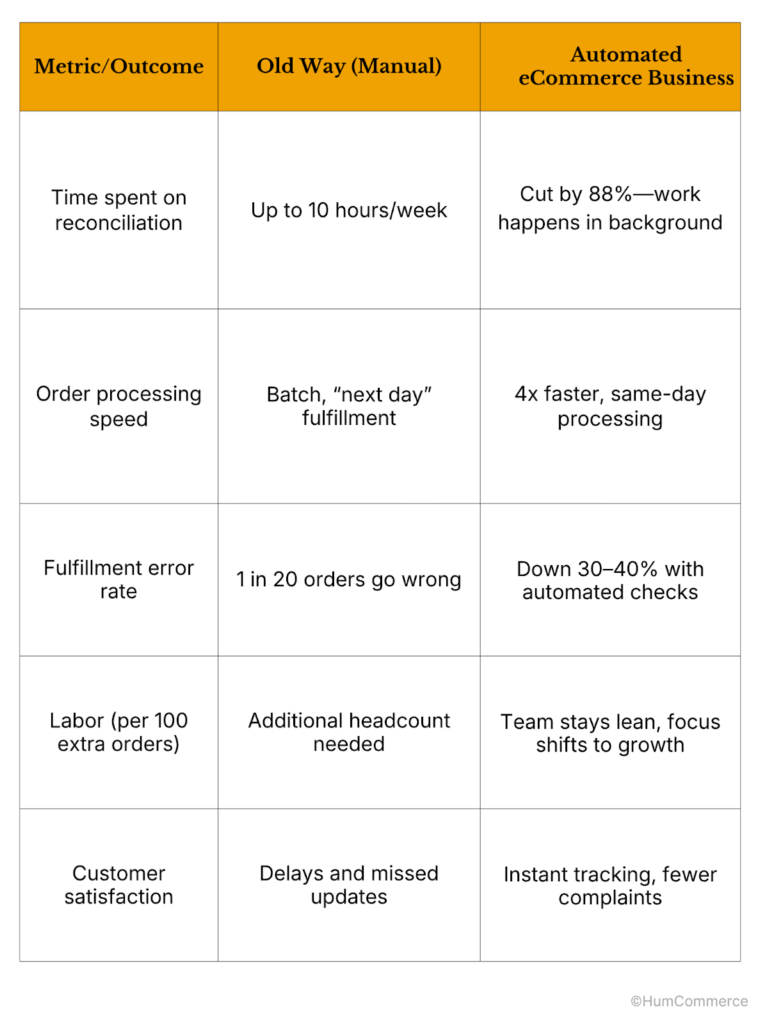
Step-by-Step: How to Start Automating Your eCommerce Operations
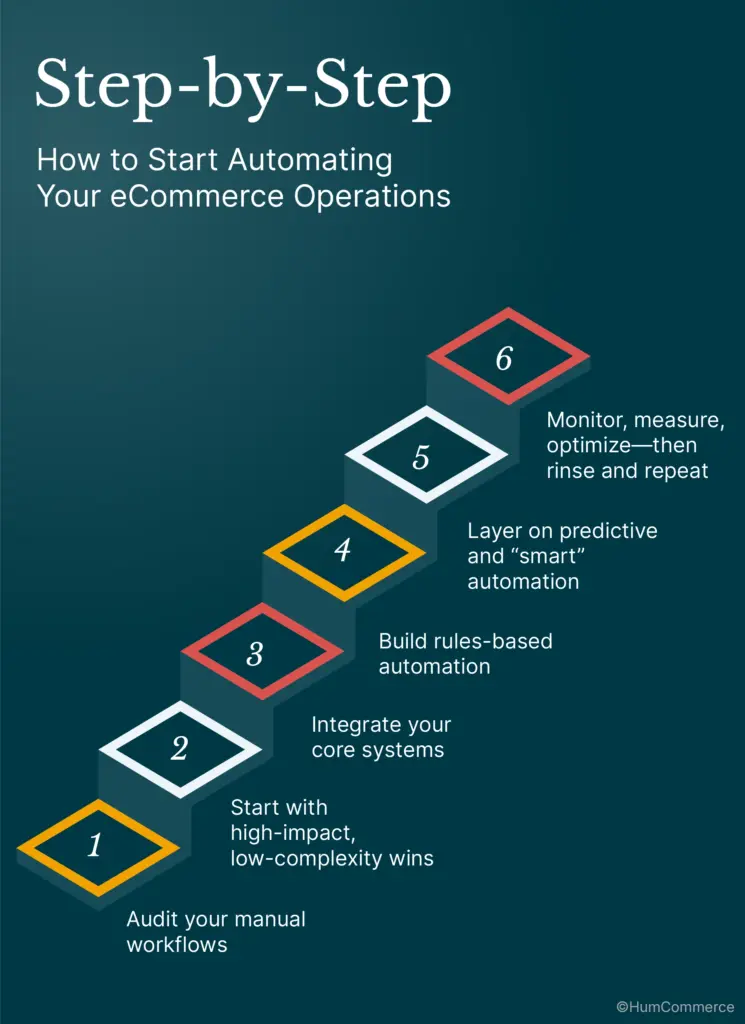
Step 1: Audit your manual workflows
Grab one week’s worth of orders and track every touchpoint: where are you retyping data, waiting on approvals, or correcting mistakes? Map the pain points, not just the process.
Step 2: Start with high-impact, low-complexity wins
Look for the repetitive tasks that drive everyone nuts, like pushing orders to your ERP or printing batch shipping labels. If you can automate one recurring headache, you’ll see instant wins and bring your team on board.
Step 3: Integrate your core systems
Sync Magento with your ERP, warehouse management, and shipping platforms. Integration doesn’t need to be perfect on Day 1, but the more your systems talk, the less time you burn on double-entry and looking for lost info.
Step 4: Build rules-based automation
Set smart rules that tell the system who gets express shipping, what carrier to use for which zones, or how to discount pricing for VIP customers. Rules handle the heavy lifting and make sure nothing falls through the cracks.
Step 5: Layer on predictive and “smart” automation
Once basic workflows are humming, add logic for forecasting demand, triggering automatic reorders, or picking the fastest/cheapest shipping option for every order. This is where you move from “fixing errors” to actually building a business that runs smoother the bigger it gets.
Step 6: Monitor, measure, optimize—then rinse and repeat
Set dashboards and schedule weekly reviews. Tweaks and improvements pay off fast. Automation isn’t about set-and-forget, it’s about continuous wins.
Common Pitfalls and How to Avoid Them
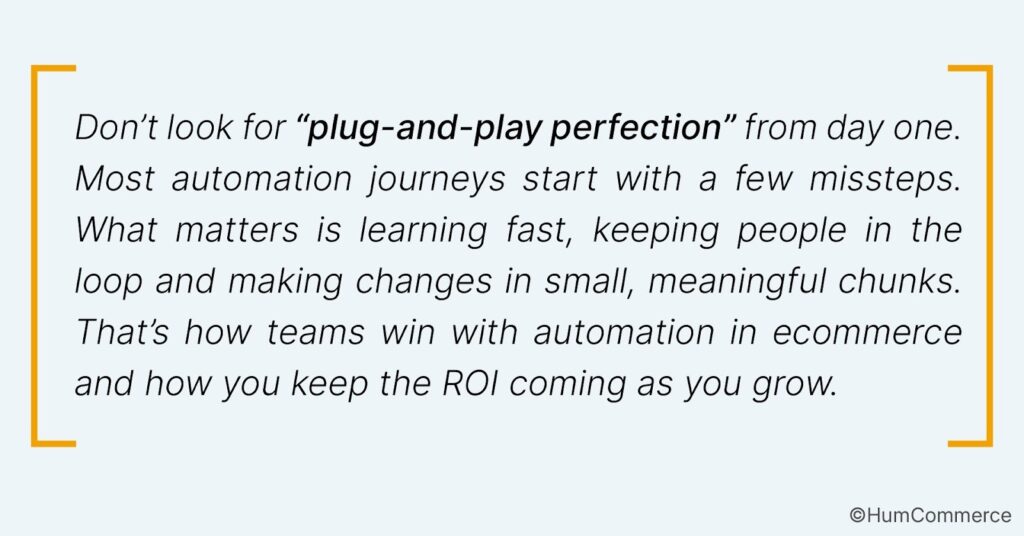
Everyone hits a few speed bumps on the road to an automated ecommerce business. Here’s what trips most teams up and how to dodge those potholes:
Starting Too Big, Too Fast
The temptation is real: your manual work is out of control, so you want to automate everything at once. But automating five messy workflows all together is a recipe for frustration.
Instead, pick your single biggest pain point—maybe it’s slow order sync, maybe it’s labeling and automate that first.
Prove it works, show the ROI, and let those quick wins build momentum before you scale up the rest.
Poor System Integration
Automation doesn’t work if your Magento order automation, ERP, shipping software, and CRM don’t play nice together.
When tools don’t fully integrate, you can actually end up with more bottlenecks and “swivel chair” work than before.
Spend a little extra upfront making sure you’re connecting the right systems, data formats, and workflows or partner with someone who gets those nuances.
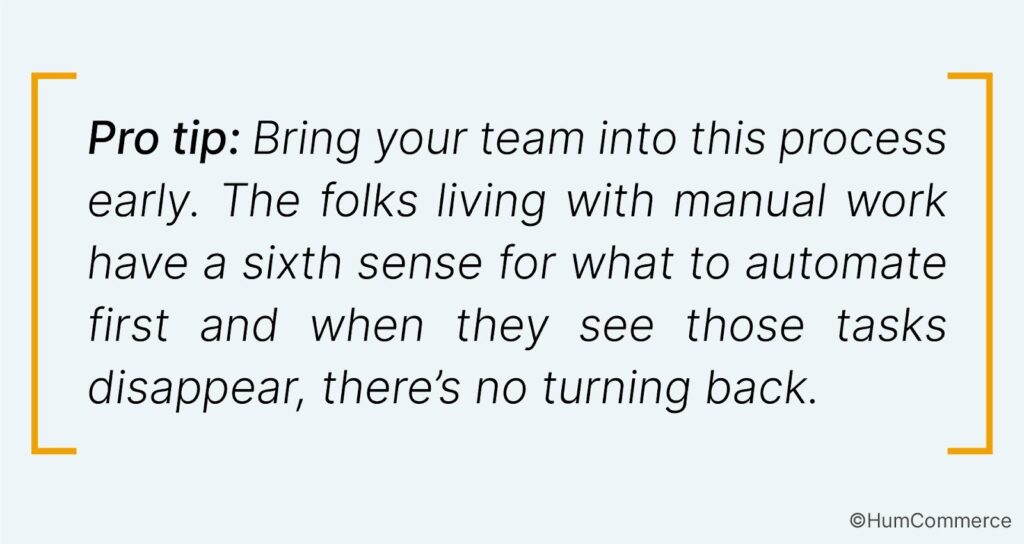
Ignoring Team Training
Even the best automation tools flop if your team doesn’t know how to use them (or worse, if they’re afraid to touch them!).
Schedule time to walk folks through changes, document new standard operating procedures, and build in checklists or dashboards so anyone can spot an issue and flag it fast.
Automation should feel like a relief, not a mystery or extra job for your crew.
What to Look for in Automation Solutions
Choosing automation in ecommerce isn’t about grabbing the newest software and hoping it’ll fix everything in one click. It’s about picking the right tools for how your business truly works.
Here’s what matters most:
- Seamless integration: Look for platforms that work smoothly with Magento, your ERP, your warehouse management system, and your CRM. The more connected, the less double entry and fewer points of failure.
- Real-time sync: Batch processing is better than nothing, but real-time sync means inventory, pricing, and orders are always up-to-date even as your order volume spikes.
- Scalability: Today you might ship 200 orders a week; next year it might be 2,000. Make sure your automation platform can follow you as you grow, without a massive re-do.
- Error handling and monitoring: Life happens – connections break, carriers glitch, SKUs change. You need tools that flag errors instantly (and ideally, fix them), not stuff that hides mistakes or leaves you guessing until someone complains.
Ending Thoughts
When orders flow, errors drop, and your team’s energy shifts from “fixing fires” to delivering a better customer experience, you feel the difference in your day and in your bottom line.
Whether you’re just beginning the journey or trying to level-up what you’ve started, you don’t have to untangle it alone. Let HumCommerce help you turn overwhelming workflows into effortless systems backed by results that speak for themselves.
Ready to take that first step? Talk to us!
It’s time to focus on the work that actually grows your business and leave the rest to automation. Let’s get your time (and sanity) back.